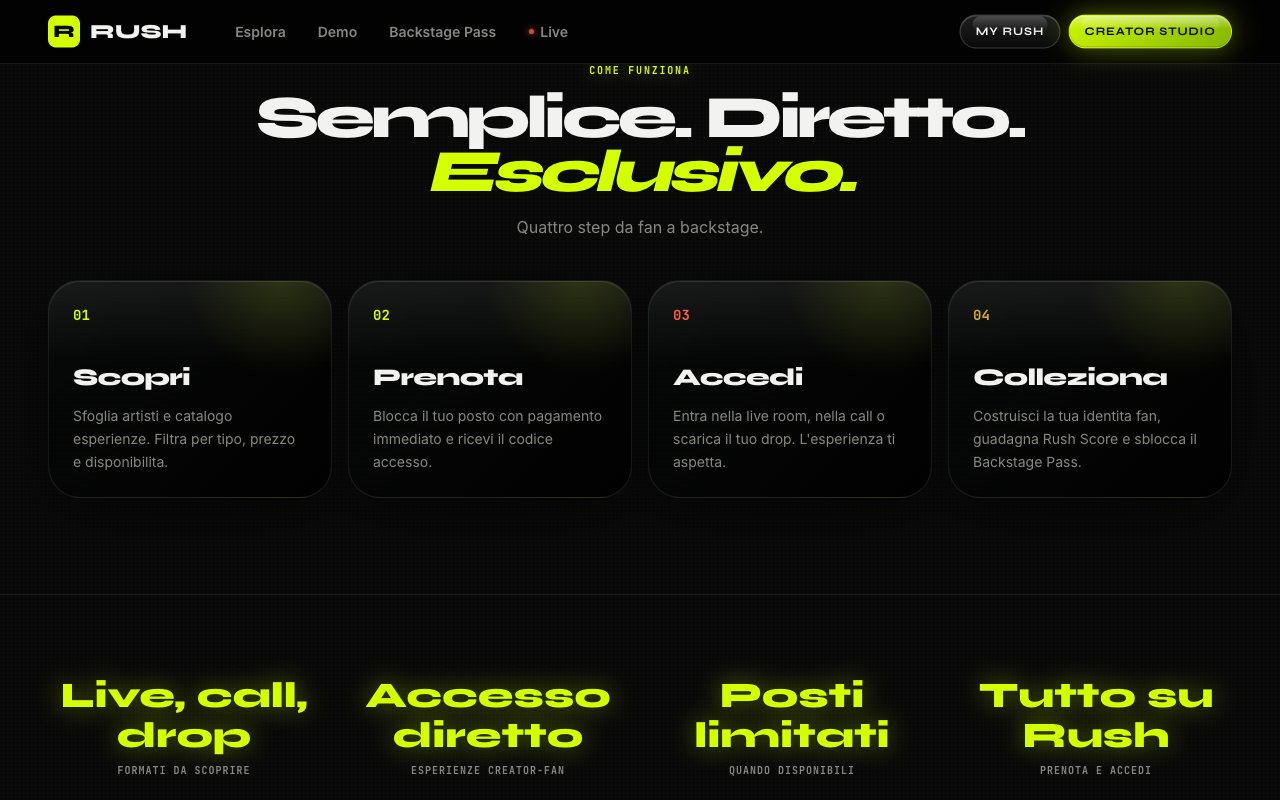
For fans
Four steps from fan to backstage: discover an experience, book it with immediate payment, join the live room or download the drop, and build a fan identity with the Rush Score and the Backstage Pass.
A marketplace where fans buy direct experiences with emerging artists: private live rooms, 1:1 calls, listening sessions and digital drops. I founded it in 2025, and in 2026 it was selected for ESCP Blue Factory.
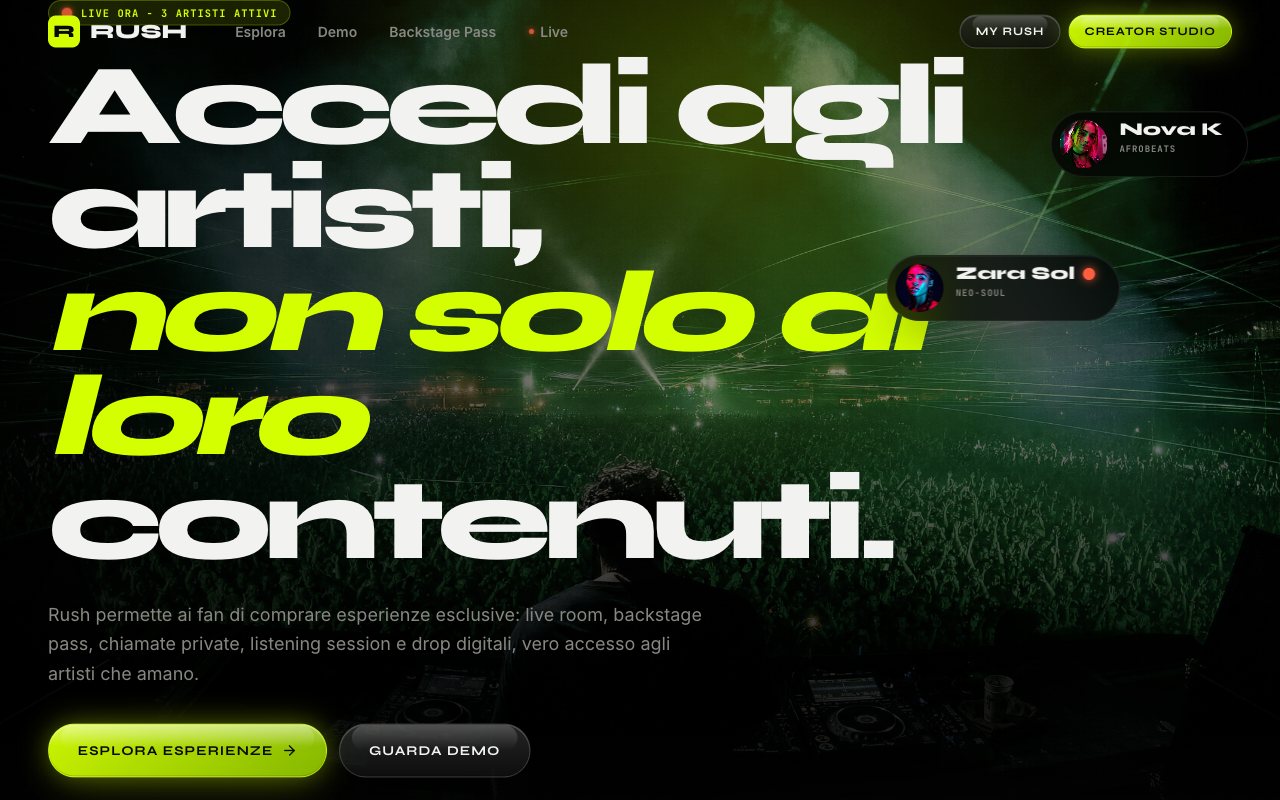
Emerging artists have fans who would pay to get closer, but no simple way to sell that access. A private call or a listening session means chasing DMs, external links and scattered spreadsheets.
Four steps from fan to backstage: discover an experience, book it with immediate payment, join the live room or download the drop, and build a fan identity with the Rush Score and the Backstage Pass.
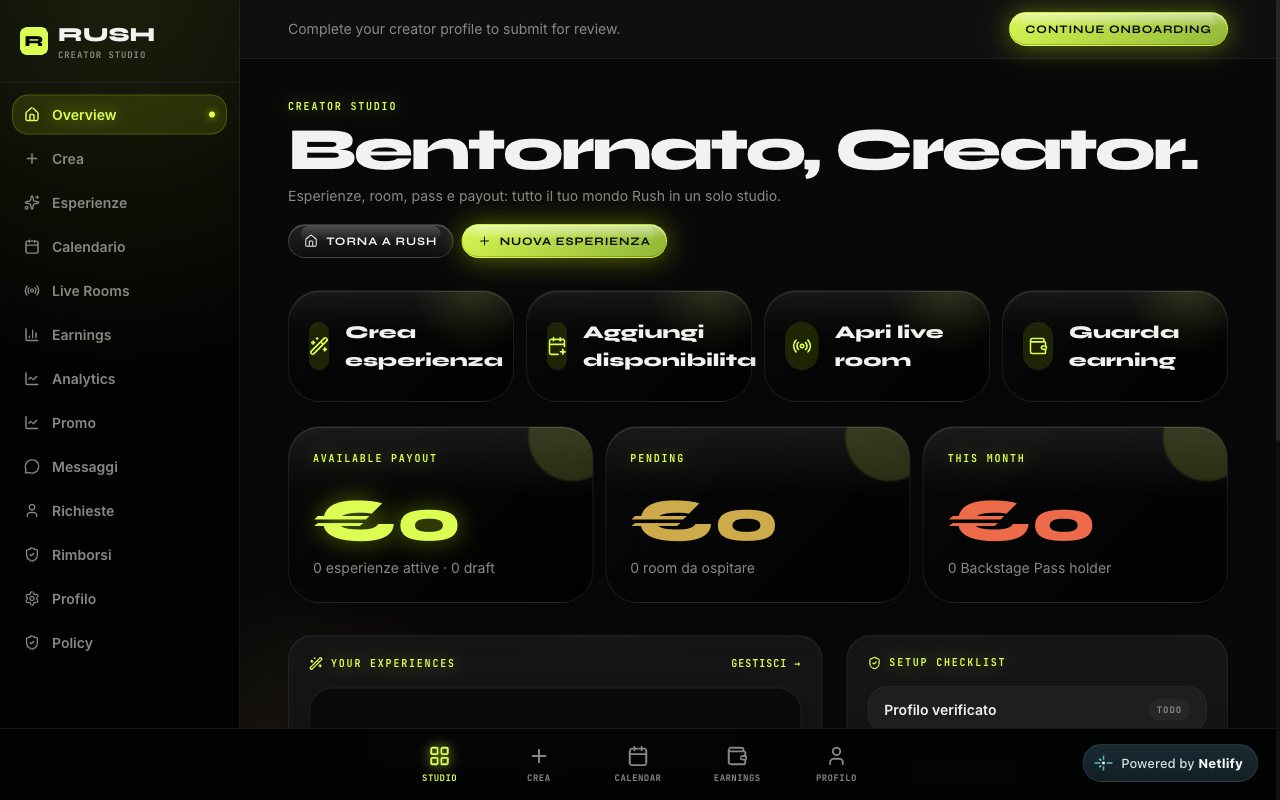
The Creator Studio puts everything in one place: create an experience, add availability, open a live room, follow earnings. Until Rush has reviewed the profile, paid publishing stays locked.
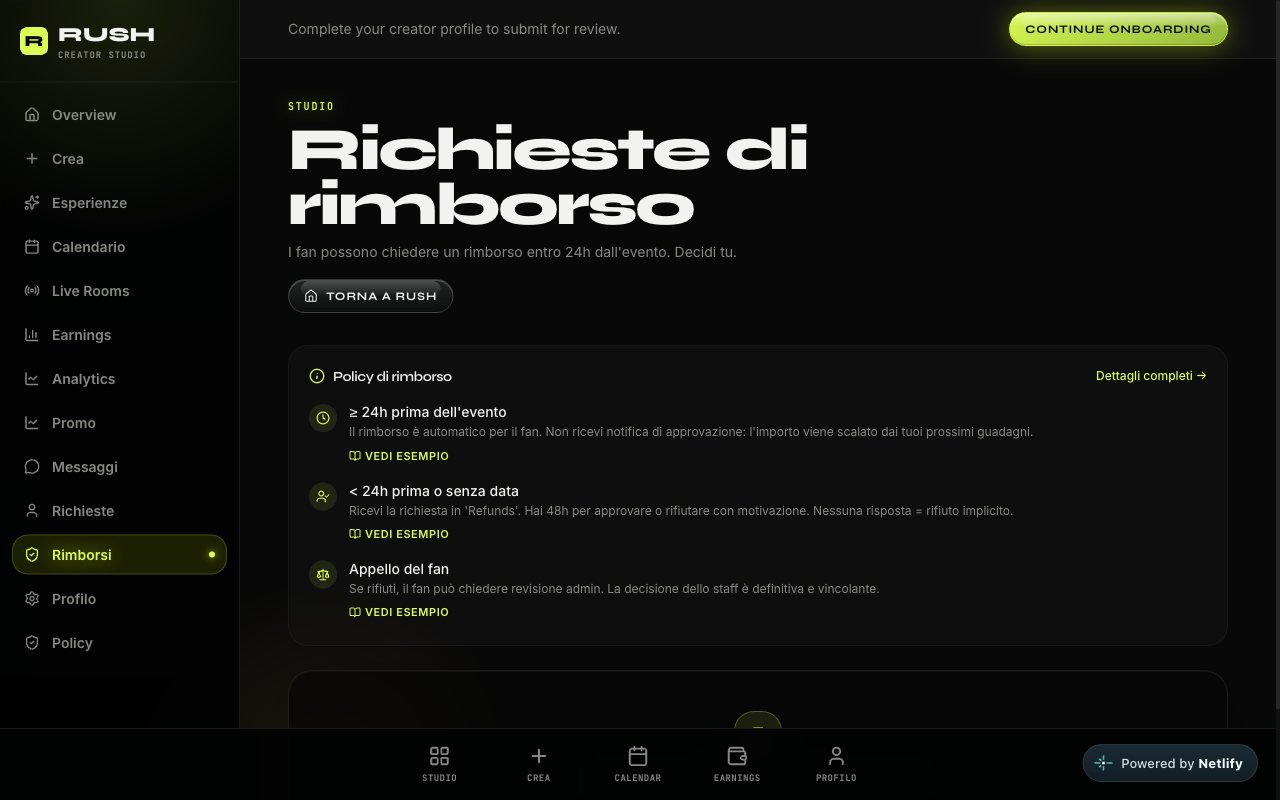
Refund requests have their own page in the studio, with the policy spelled out for the artist: what happens before and after the 24-hour mark, and how a fan can appeal.
Rush started as a token-based platform. My mentor in Blue Factory suggested the pivot: the token model ran into copyright and regulation. Selling direct experiences is much simpler legally and has a clearer revenue model.
The token model was the idea I started with. Changing it taught me to let go of a first idea when the rules and the numbers point elsewhere.
Publish the first experiences with verified artists and measure how many people on the waitlist turn into paying fans.
Names, reviews and figures shown in the screenshots are demo data, made up for presentation.